A szerelem mint boldogság
Csongor és TündeA szerelem mint boldogság presents love as the highest treasure and the condition through which life’s suffering can acquire meaning. In Mihály Vörösmarty’s 1831 play Csongor and Tünde, this idea is not merely declared: it is tested by separation, by Csongor’s sense that happiness belongs to everyone but him, and finally by the lovers’ reunion. The play’s ending imagines love not as an escape from the journey’s pain but as its long-awaited fulfillment.
The Tree and the Highest Treasure
The play gives the idea a concrete emblem in the tree Csongor plants. Its fruit is described as treasure, but the hierarchy is explicit: love is the greatest treasure of all. The image joins material abundance to inward value while refusing to treat them as equivalent. The tree may bear riches; what Csongor seeks in the world it represents is the beloved he cannot find. The gap between the visible promise of treasure and the absence of his beloved makes the image a measure of longing as well as fulfillment.
That contrast gives the theme its structure. Love is named as the highest good before it is possessed, so the declaration carries the pressure of an unmet desire. The beloved remains absent even as the tree’s promise is associated with love’s beautiful world. The ideal is present to the imagination but not yet available in lived experience: happiness is something Csongor can pursue and affirm, but not simply claim.
Love Against Despair and Isolation
The struggle to reach Tündérhon tests whether love can orient a person when the world offers no assurance of reward. Csongor calls on love to light his way and guide him toward that realm. The appeal makes love both destination and direction: it is the happiness he seeks and the force by which he continues seeking. The language of guidance also gives the pursuit a spiritual cast without reducing it to a settled victory; at this point, the path remains to be traveled.
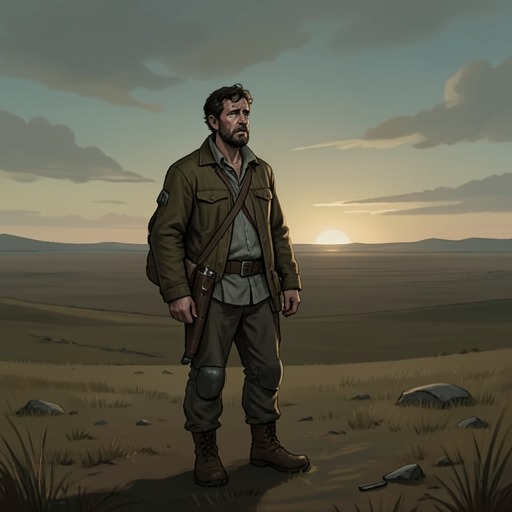
The play sharpens the cost of that pursuit through Csongor’s declaration that, in an apparently endless world, everyone is happy except him. His claim turns private grief into a stark isolation: the world seems to contain happiness, yet he experiences himself as its sole exclusion. Set beside the earlier image of love as the chief treasure, this moment reveals how far the ideal and its fulfillment have diverged. Love matters precisely because its absence makes the surrounding world feel unbearable.
Even under such pressure, Csongor insists that he will go wandering for Tünde. His resolve survives despair, and the fire associated with that resolve becomes an image of persistence through darkness. The declaration does not erase the separation; it defines the choice to endure it. Love thus appears not only as a promised state of happiness but as an attachment that continues to direct action when happiness is nowhere in view.
Limits of Knowledge and the Imagined Beyond
The play places this emotional quest against a broader reflection on human limitation. The Scholar calls humanity a victim of self-interest, while Csongor’s search for Tündérhon meets the painful recognition that the desired otherworld is not appearing to him. His instruction to his beloved to sleep because her dawn has not yet come gives waiting an intimate, temporal form: fulfillment belongs to a future that has not arrived. The lovers’ happiness is therefore set against both worldly self-absorption and the uncertainty of whether an imagined beyond can be reached.
The play’s origin image, spoken by Éj, opens a still larger scale. She recalls that darkness and nothingness existed before her and that she gave birth to the world. Against this cosmogonic darkness, Csongor’s vow to continue seeking Tünde makes personal love a light held within an immense, obscure existence. The contrast does not make the lovers’ attachment a solution to every metaphysical question. Instead, it lets the intimate promise of love stand against a world whose beginnings are figured as darkness and whose human inhabitants remain constrained by self-interest and incomplete knowledge.
Reunion and the Fulfillment of the Theme
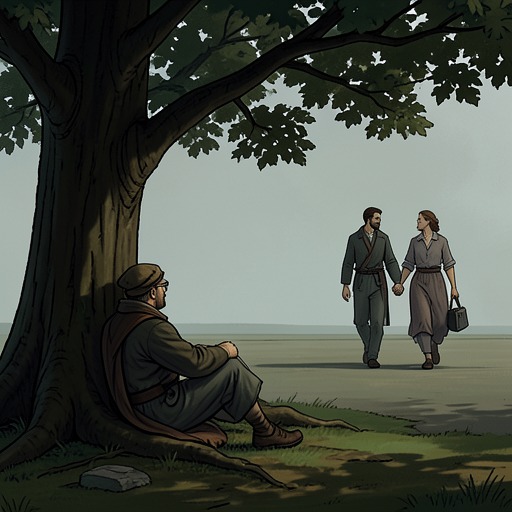
At the close, Csongor recognizes Tünde and names the recognition as a release after suffering. The reunion gives bodily and relational form to the earlier ideal: the beloved once absent is now beside him, and he rests in her embrace. The final scene does not treat the journey’s pain as imaginary; its emphasis on suffering makes reunion matter because separation has lasted and hurt.
Tünde answers with a reflection on the insufficiency of words and reason. In the happiness she describes, feeling and knowing coexist with intimation and desire, suggesting an experience that thought can approach but not fully contain. The lovers’ exchange consequently places fulfilled love beyond mere argument or explanation. The theme’s culmination is experiential: intimacy communicates what language and reason cannot exhaust.
Their final invitation to rest in one another’s arms transforms the earlier condition of searching into a shared, protected present. The promise that they will live in bliss, undisturbed and unwilling to exchange their state for the world, gives the play’s ideal a striking boundary: happiness is secured in the lovers’ mutual life, not in worldly possessions or public achievement. The tree’s greatest treasure is thus realized not as an object but as a relationship. Love becomes happiness through recognition, reunion, and reciprocal attachment—an ending that answers Csongor’s solitude without pretending that the path to it was painless.